Guide · 8 min read
How to choose between sail, motor and catamaran
Three hulls, three different weeks. The choice sets your motion, your draught, your marina bill and where you can drop the hook — long before it decides how you look at anchor. Here is how we sort it for guests.
7 chapters · 8 min read · Updated 3 September 2026
Photo · Jess LoitertonHow it feels underway
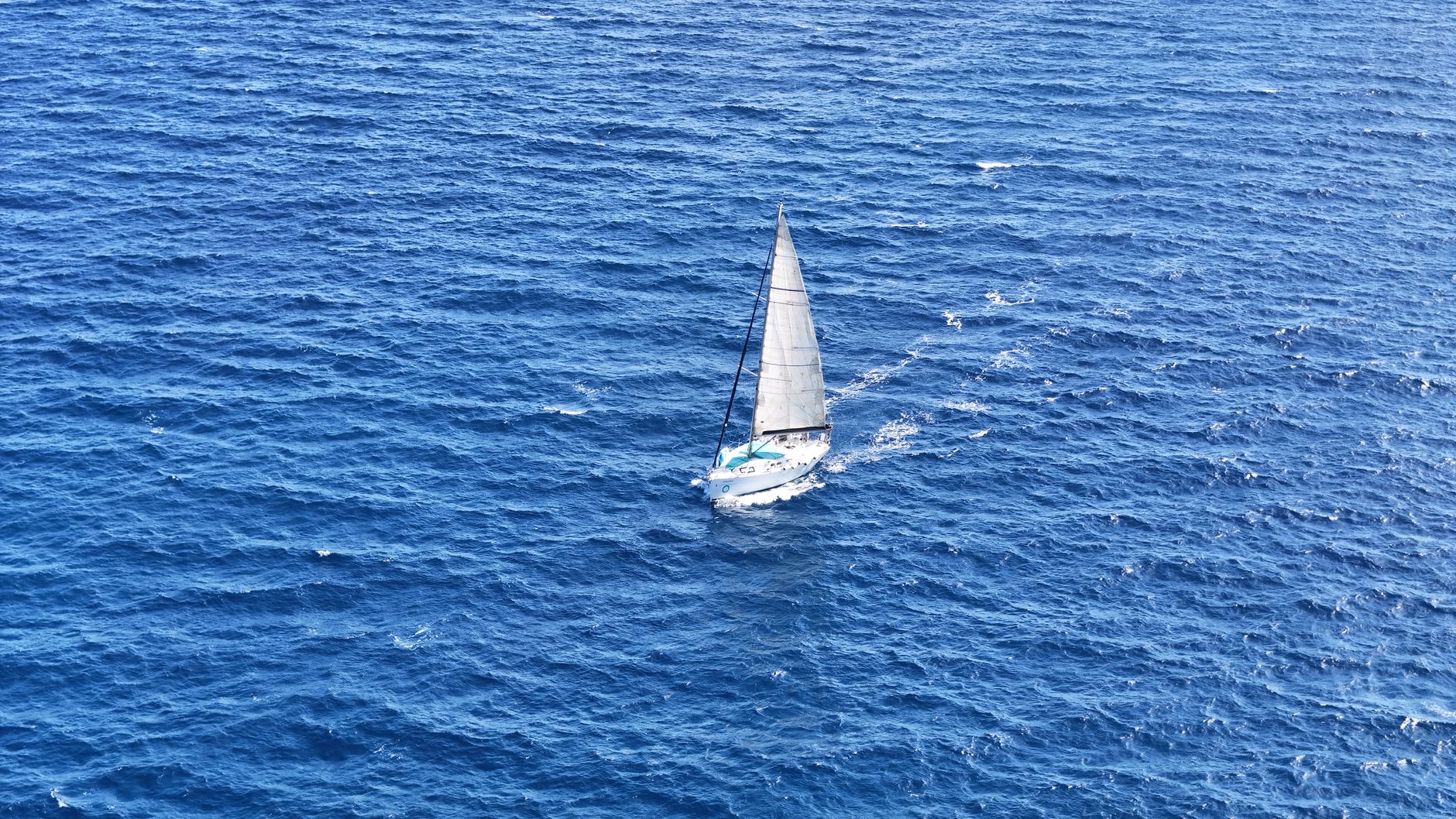
A monohull heels. In 12 to 15 knots of Adriatic maestral that is 15 to 20 degrees of lean, the leeward rail wet, the boat locked into the water and quiet apart from the rush along the hull. Most sailors want exactly this and will not trade it. Everyone else discovers that cooking, reading and pouring a drink at 20 degrees is a learned skill, and that a boat which heels also rolls at anchor when a ferry wake arrives.
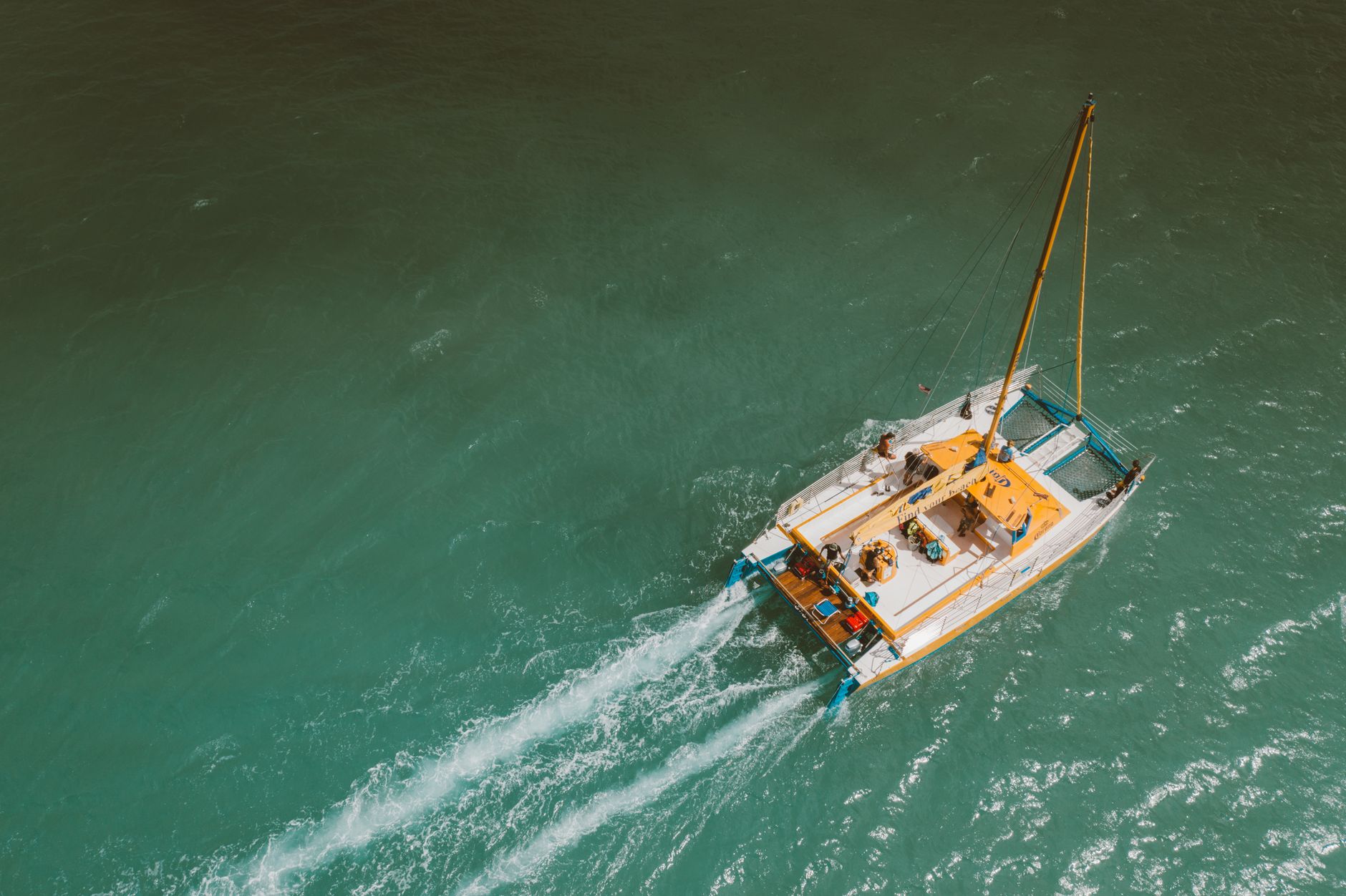
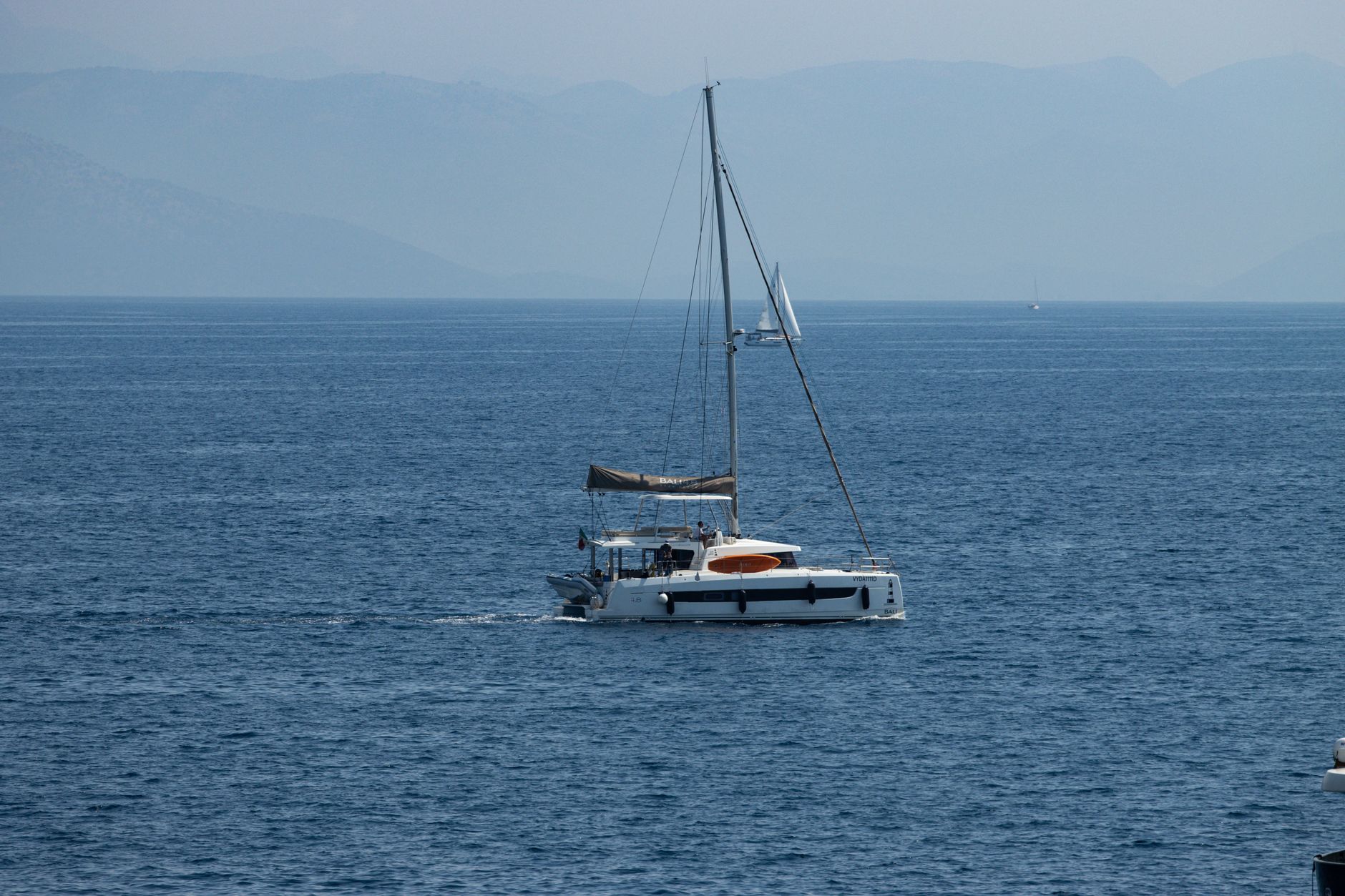
A catamaran stays flat and gives you a different motion instead: a quick, jerky pitch as the bridgedeck meets a short chop, and an occasional slam underneath the saloon floor that sounds far worse below than it is. Upwind in a fresh meltemi a cruising cat will not point as high as a decent monohull and will slide sideways instead. Off the wind in 15 knots it is fast, level and genuinely easy — which is why charter fleets keep buying them.
A motor yacht removes the sailing question and replaces it with a throttle. You arrive in an hour instead of four, which matters when your week is short and the distances are long. The trade-off is noise, wake and a boat that rolls beam-on to a swell unless you fit stabilisers, plus the fact that engines are the only thing standing between you and a tow. We would rather have two propellers on a catamaran than one on a monohull for exactly that reason.
Space, sleeping and the crew you're bringing
Count heads and count heads — the people and the bathrooms. A 45ft monohull with four cabins sleeps eight but usually shares two heads, and the forward cabin is a wedge that shrinks towards the bow. The same length in a catamaran gives four proper double cabins, four heads in the owner-style layouts, and a cockpit and saloon that flow together at one level. For two couples who barely know each other, or a family with teenagers, that separation is worth more than any spec sheet suggests.
Skill in the crew changes the answer as much as size does. If nobody holds a certificate, or nobody wants to spend the week thinking about weather, a crewed sailing yacht puts a skipper and often a hostess aboard and turns the whole question into someone else's job. A skipper alone takes one cabin or sleeps in the saloon — worth checking before you book a boat that is already full.
There are two ways round the numbers if your group is small. A flotilla yacht charter puts you on your own bareboat but in a group of eight or ten boats with a lead crew, a briefing every morning and a mechanic on call — the standard way in for first-time skippers in the Ionian and in Croatia. Or take a cabin charter Croatia berth, where you buy one cabin on a larger yacht and share the boat with strangers who will not be strangers by Wednesday.
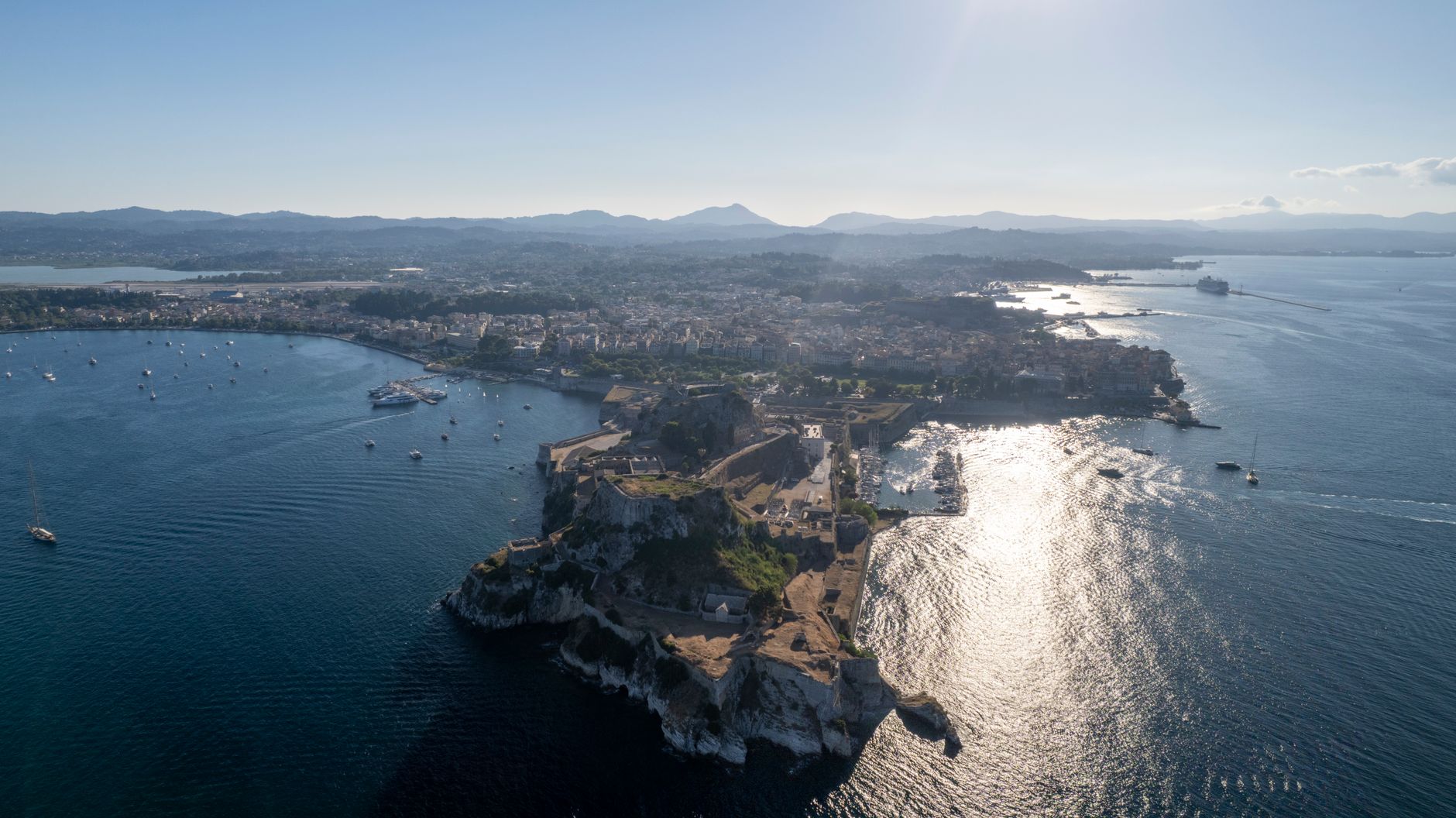
Draught, anchorages and where you can actually go
Draught is the least glamorous number on the specification and the one that decides your week. A 46ft monohull with a deep keel draws 2.2m to 2.35m. A 45ft catamaran draws about 1.3m. In the Exumas and across the banks of the Bahamas, where whole cruising areas sit in 2m or less at low water, that difference is not a preference — it is the difference between a route and a diversion.
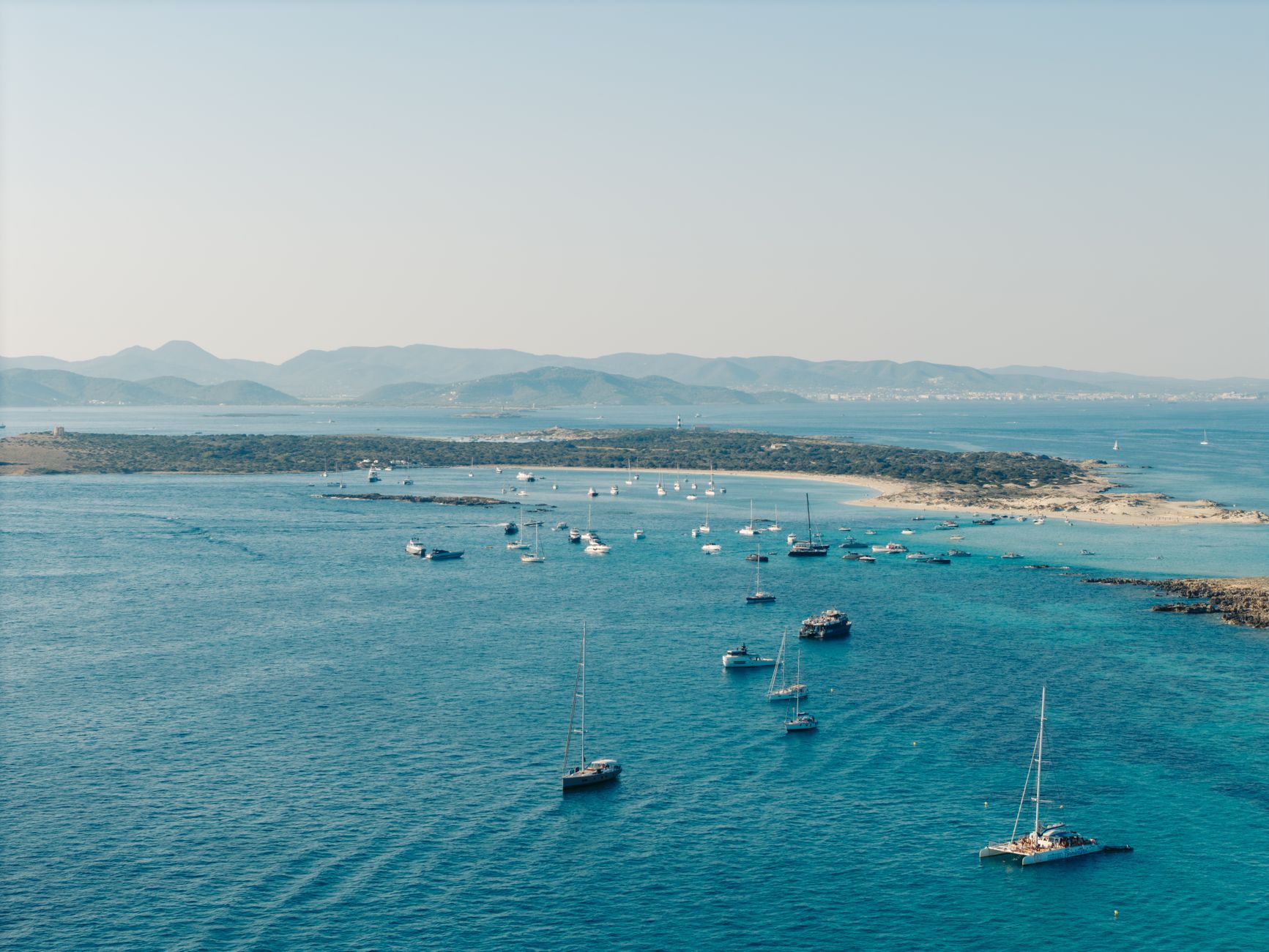
Shoal draught also changes what an anchorage feels like. A catamaran tucks inside the bay, anchors in 3m of sand where you can see the hook from the deck, and lies to two bridles without swinging. A deep-keeled monohull anchors further out in 8m to 12m, swings more, and shares that outer ring with everyone else. In the British Virgin Islands much of this is settled for you anyway: you pick up a mooring ball at The Bight or Cane Garden Bay and the depth question disappears.
The catch runs the other way in town. Med-mooring stern-to on the riva at Hvar or Korčula in August, a 7.5m-wide catamaran occupies two monohull berths and the harbourmaster charges accordingly — when a berth exists at all. Monohulls squeeze in where cats are turned away, and in high season on the Dalmatian quays that is a real advantage. Book berths ahead or plan to anchor; both are honest answers.
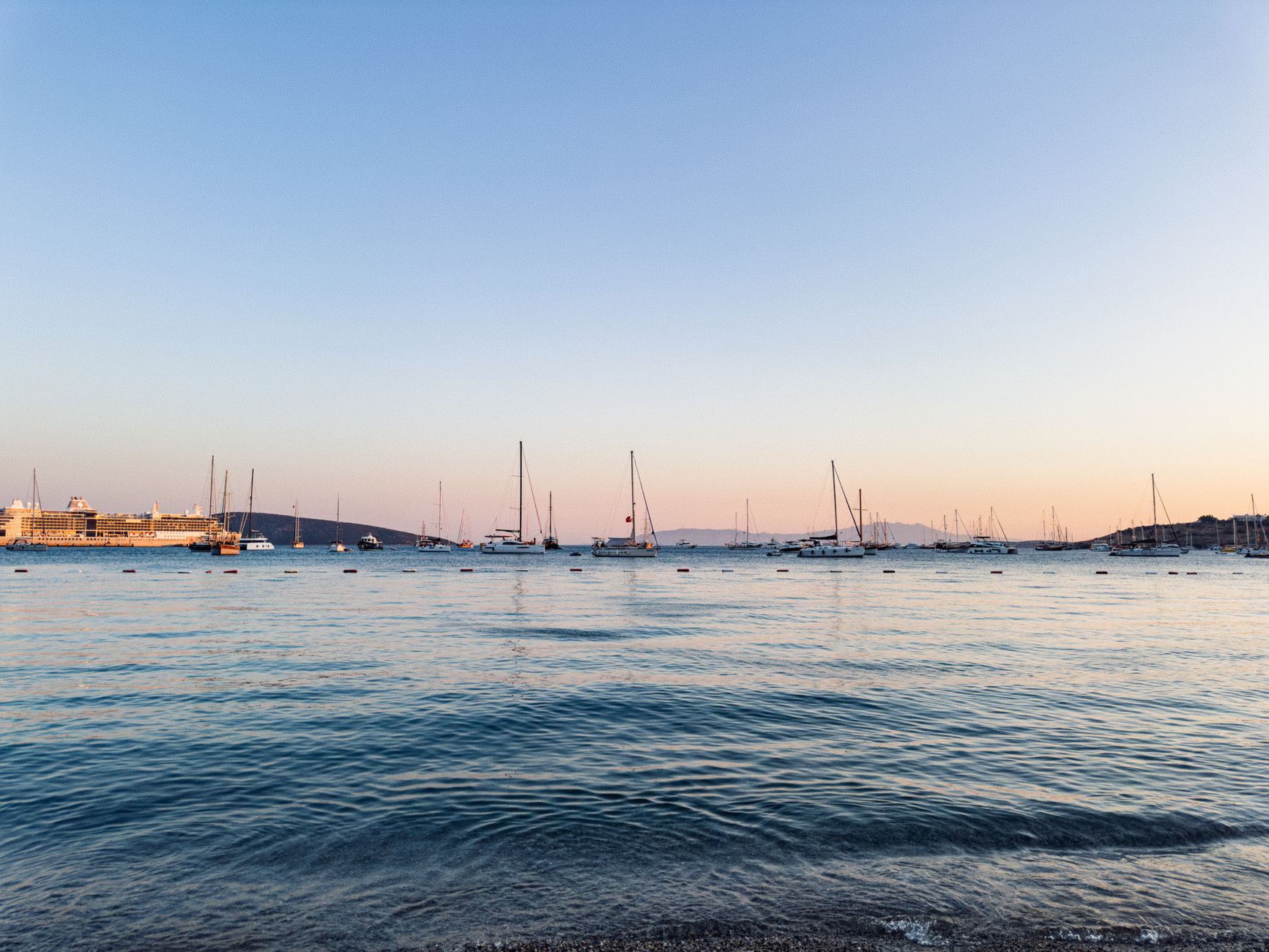
What it costs — charter, fuel and the marina bill
Take the headline fee first. A bareboat monohull of 40ft to 46ft runs roughly €2,500 to €4,500 a week in shoulder season across Croatia and Greece. A comparable catamaran of 42ft to 46ft sits in a different band — think roughly €5,000 to €9,000 a week for the same dates — because there are fewer of them and they book out first. A 45ft to 55ft motor yacht typically lands between those and above them depending on whether it planes, and its charter fee is only part of the bill.
Then the running costs, where the three boats separate hard. A sailing yacht might burn 60 to 100 litres of diesel across a week if you sail most of it. A planing motor yacht burns that in a morning at cruising revs, and diesel in a Croatian or Greek marina is not cheap; hold 8 to 9 knots instead of 20 and the fuel line falls away dramatically, which is the single most useful thing to know about chartering under power. Ask the broker for a realistic weekly fuel estimate at your intended speed, not at idle.
Marina berthing is the cost people forget. A catamaran commonly pays 1.5 to 2 times the monohull rate for the same night on the same quay, and in Croatian ACI marinas through July and August that difference compounds over seven nights into real money. Add a skipper at roughly €150 to €220 a day plus provisions if you want one, and budget a refundable security deposit, usually a few thousand euros, or the insurance waiver that reduces it.
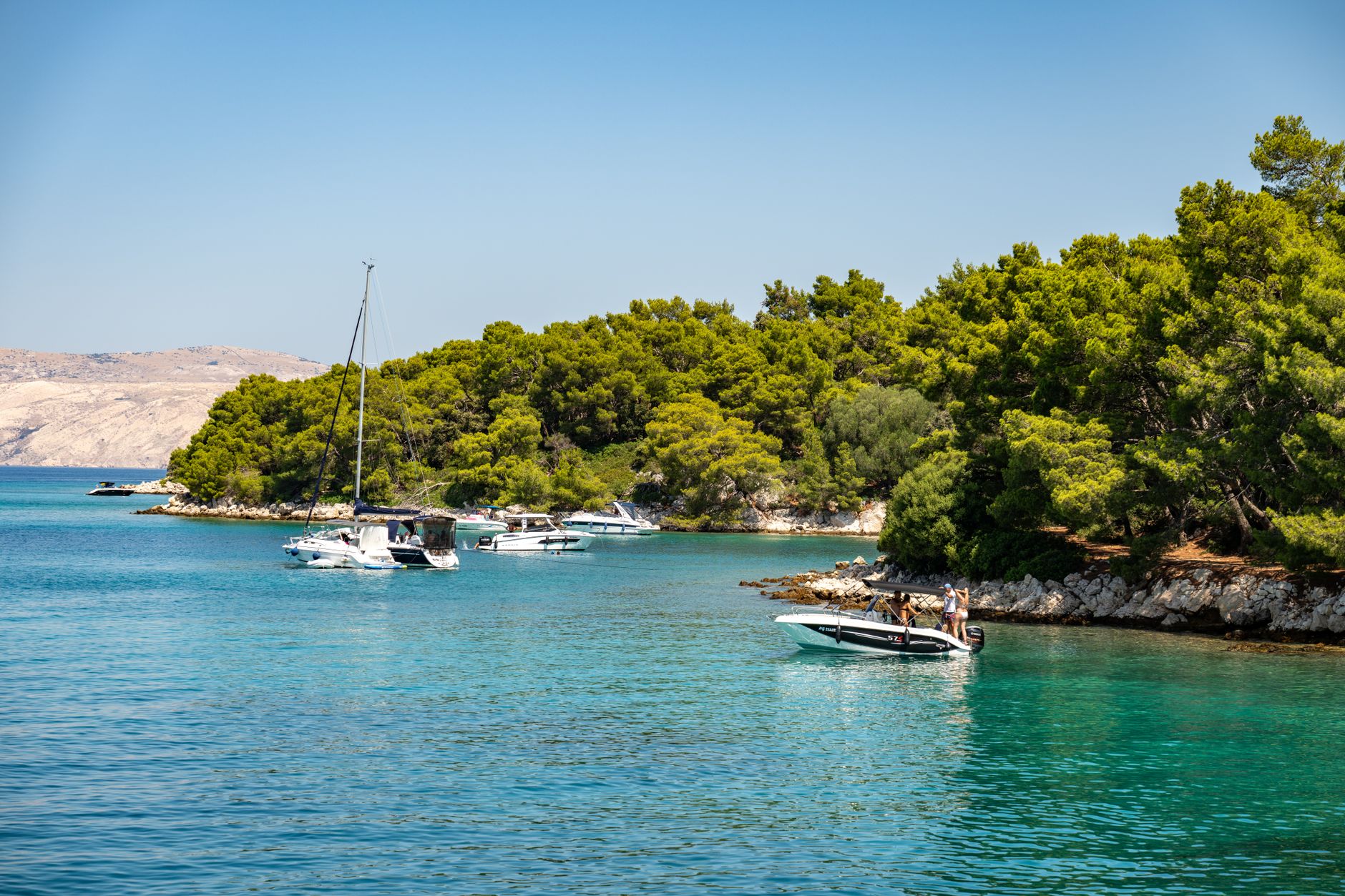
Matching the boat to the grounds
Some cruising areas argue for themselves. An Ionian islands yacht charter out of Lefkas or Corfu means short hops of 10 to 20 miles, a sea breeze that fills to 8 to 14 knots after lunch and dies at sunset, and quay-side tavernas in Fiskardo and Kioni. A modest monohull is perfect there and a large motor yacht is largely wasted — you would arrive before the wind did. The Aegean is the opposite argument: the meltemi blows Force 5 to 7 for days at a time in July and August, and that suits a well-found sailing yacht and a crew who can reef, not a flat-decked cruiser. Both live on our Greece pages.
Croatia rewards a monohull in high season because of the quays, and rewards a catamaran in June or September when berths are findable and the maestral fills gently at midday. Keep an eye on the bora — it funnels out of the Velebit channel with no warning and it is the one wind that ends a day's plans early. In Thailand the season runs November to April, the limestone karsts of Phang Nga sit in shallow, sheltered water, and a catamaran or a power catamaran out of Yacht Haven or Ao Po makes obvious sense for the flat decks and the 1.2m draught.
The Caribbean splits cleanly. The north-east trades blow a steady 15 to 20 knots through the Sir Francis Drake Channel and the passages are short and protected, which is why the BVI fleets are catamaran-heavy and why first-timers do so well there. Anegada is the only leg that asks for real navigation, and plenty of charters skip it. If your grounds involve long open passages instead of day hops, weight the answer back towards a sailing monohull that can carry way in a swell.
So which one
Work it in this order and the choice usually makes itself. Count your crew and your bathrooms; check the draught against the anchorages you actually want; look up what the wind does there in your month; then put the charter fee, the marina nights and the fuel into one number rather than comparing headline prices. If two boats still tie, pick the one whose motion your least-keen crew member will tolerate on day three — that is the person who decides whether you charter again.
Monohulls suit sailors, tighter budgets, high-season town quays and anyone who wants the boat to feel like sailing. Catamarans suit families, mixed-ability groups, shallow grounds like the Bahamas and the BVI, and anyone who would rather not heel. Motor yachts suit short weeks, long distances, guests who are here for the water rather than the wind, and crews happy to watch a fuel gauge. If you tell us your dates, your crew and the one thing that would ruin the week, we will shortlist three boats and say plainly which we would take ourselves.