
Guide · 8 min read
Island-Hopping the Dalmatian Coast: An Honest Week Under Sail
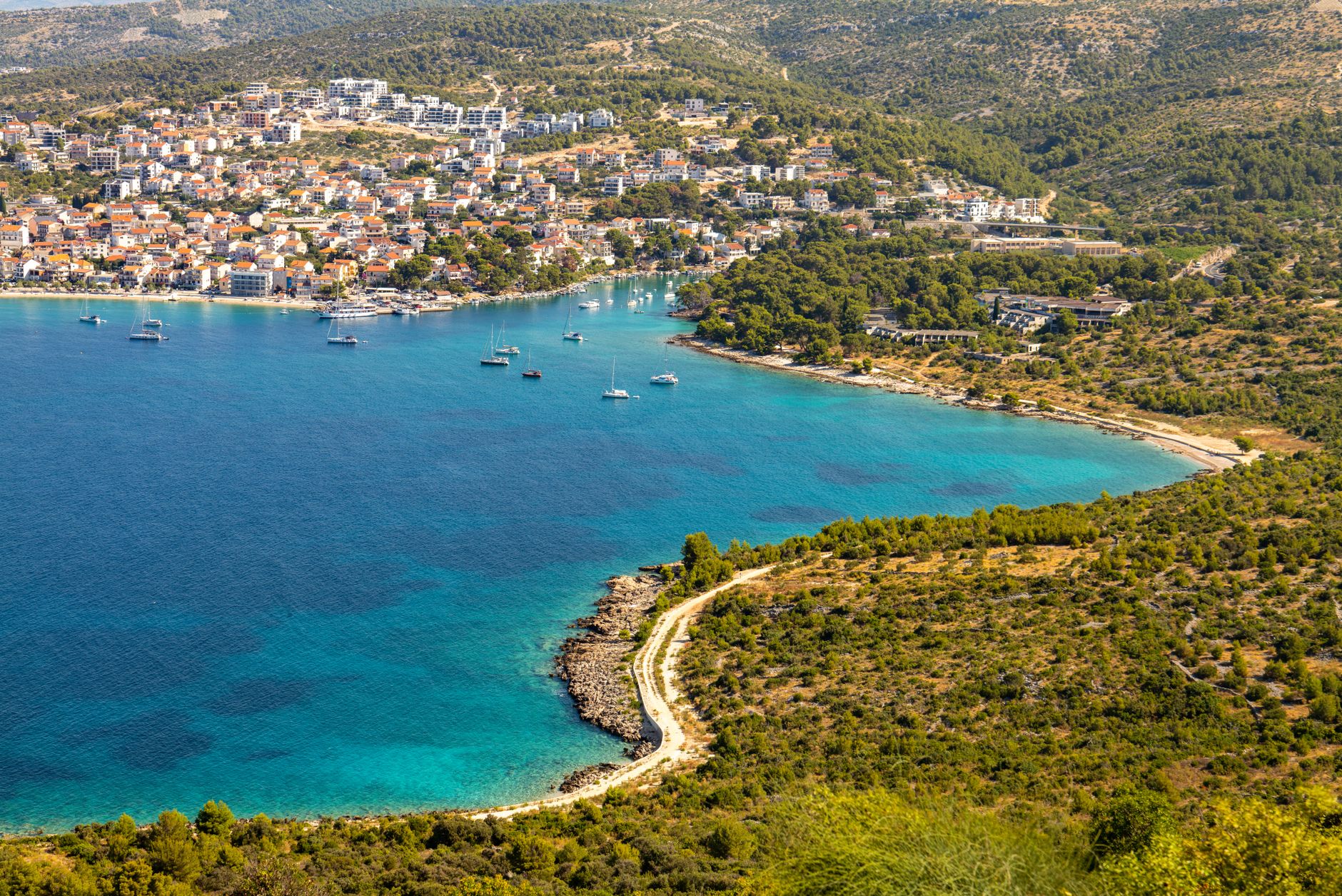
Seven days, roughly 150 nautical miles, and a decision every afternoon about whether to take a town quay or drop the hook. Here is what a week in the Dalmatian islands is actually like — wind, fees, paperwork and the parts nobody advertises.
9 chapters · 8 min read · Updated 3 September 2026
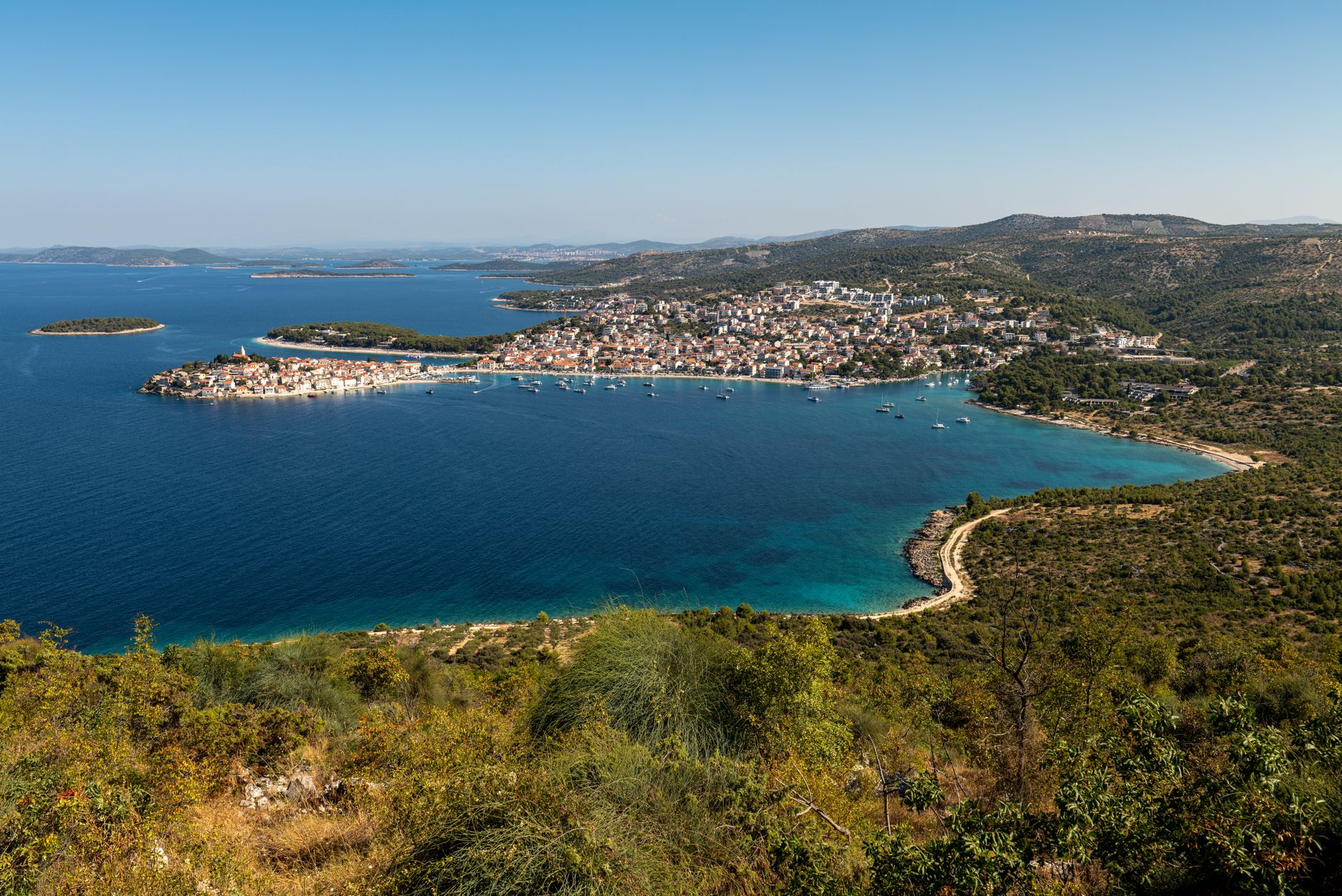
Photo · Vladimir SrajberA week that works
- Day 1A Saturday-to-Saturday circuit from Kaštela covers about 150 nautical miles without a single long day. Sunday: Maslinica on Šolta, 14nm, an easy shakedown with a bay you can anchor in if the marina is full. Monday: Komiža on Vis, around 30nm across open water and the longest leg of the week. Tuesday: Vis town, or straight to Palmižana. Wednesday: Hvar. Thursday: Korčula, via Šćedro. Friday: Milna on Brač. Saturday: back to base for a morning handover.
- Day 2Split to Hvar is roughly 22nm, which is the useful yardstick for the whole area — most hops are two to four hours under sail, and you can change your mind at lunchtime. Run the circuit anticlockwise if the forecast shows a settled north-westerly; you will reach more and beat less. Book any night you actually need a marina berth by mid-morning in July and August, because Hvar and Korčula fill by 16:00.
- Day 3If organising a whole boat is more than you want, the same islands work other ways. A flotilla yacht charter runs a group of boats with a lead skipper and a briefing each morning, which suits people who can sail but do not want to plan. Cabin charter in Croatia sells the week by the berth on a shared boat — cheaper, sociable, and you do not choose the route.
Hvar or Korčula
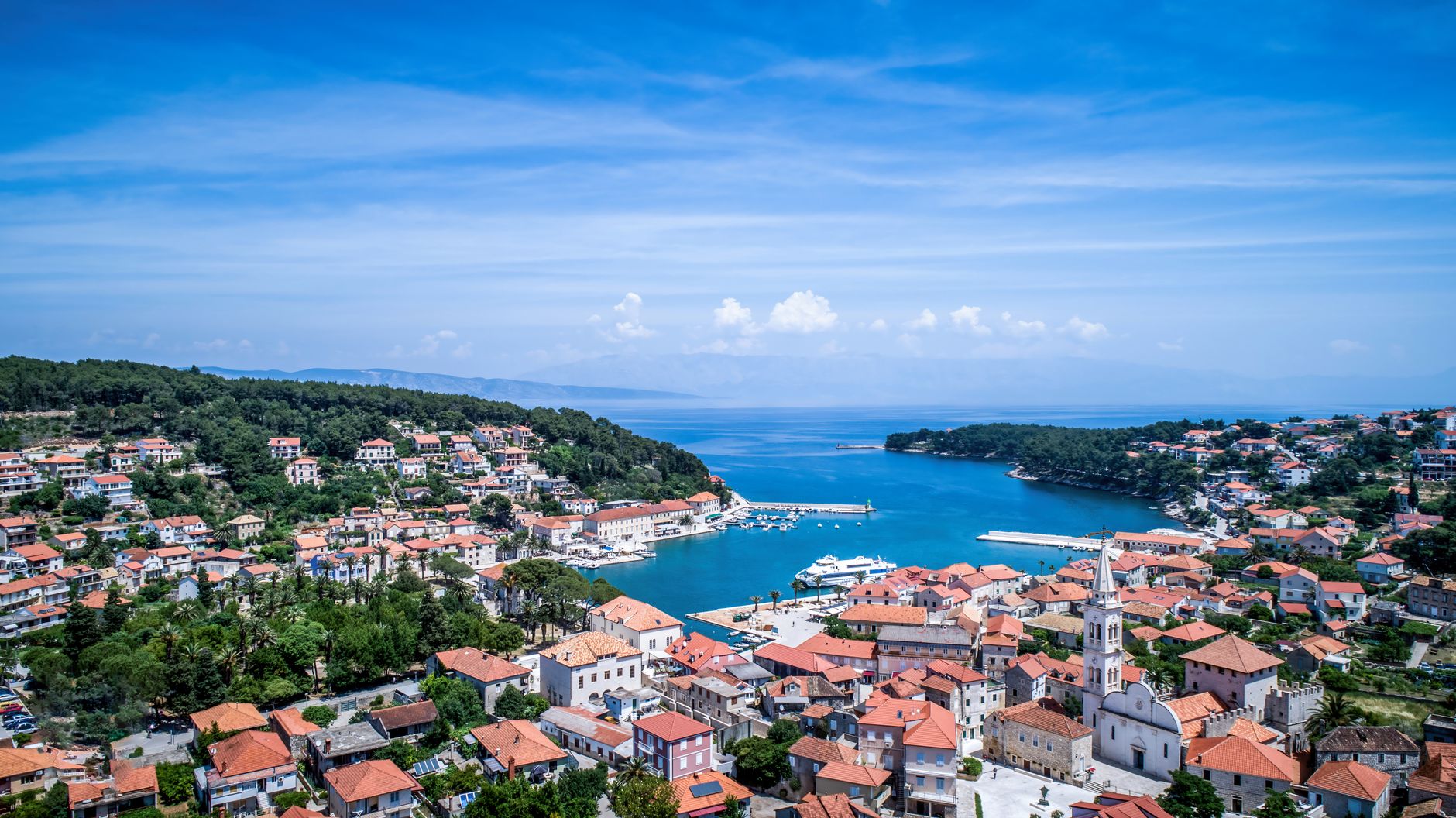
Hvar town is the busy one, and it earns some of the fuss. The quay is short, expensive and usually spoken for by early afternoon; most charter boats take the ACI marina at Palmižana on Sveti Klement, 2nm across the channel, then a water taxi in. Palmižana holds decent shelter from the north-west and none from the south. The bars in Hvar run until 03:00 and the sound carries over water, so the far side of the Pakleni islands is a quieter berth than you would guess.
Korčula is calmer, older and better for sleeping. The ACI marina sits east of the walled town, exposed to a swell when the jugo blows, with Lumbarda a few miles round as the fallback and a good anchorage off Vela Przina. Across the channel, the Pelješac peninsula grows the Plavac Mali that ends up on every konoba wine list. Wednesday evening in Korčula is a slower, cheaper night than Wednesday in Hvar, and the moreška sword dance is worth an hour.
The wind you will actually get
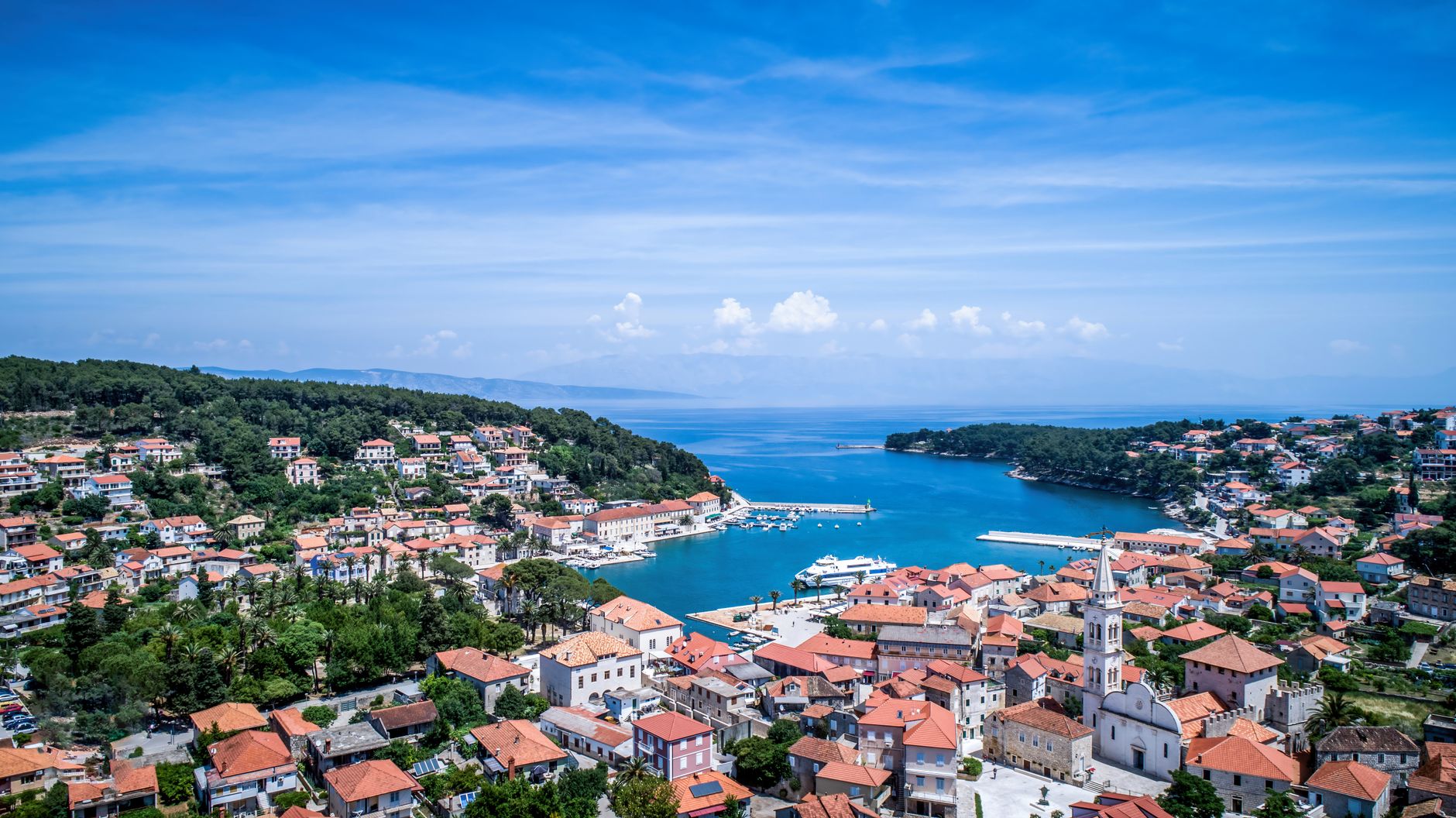
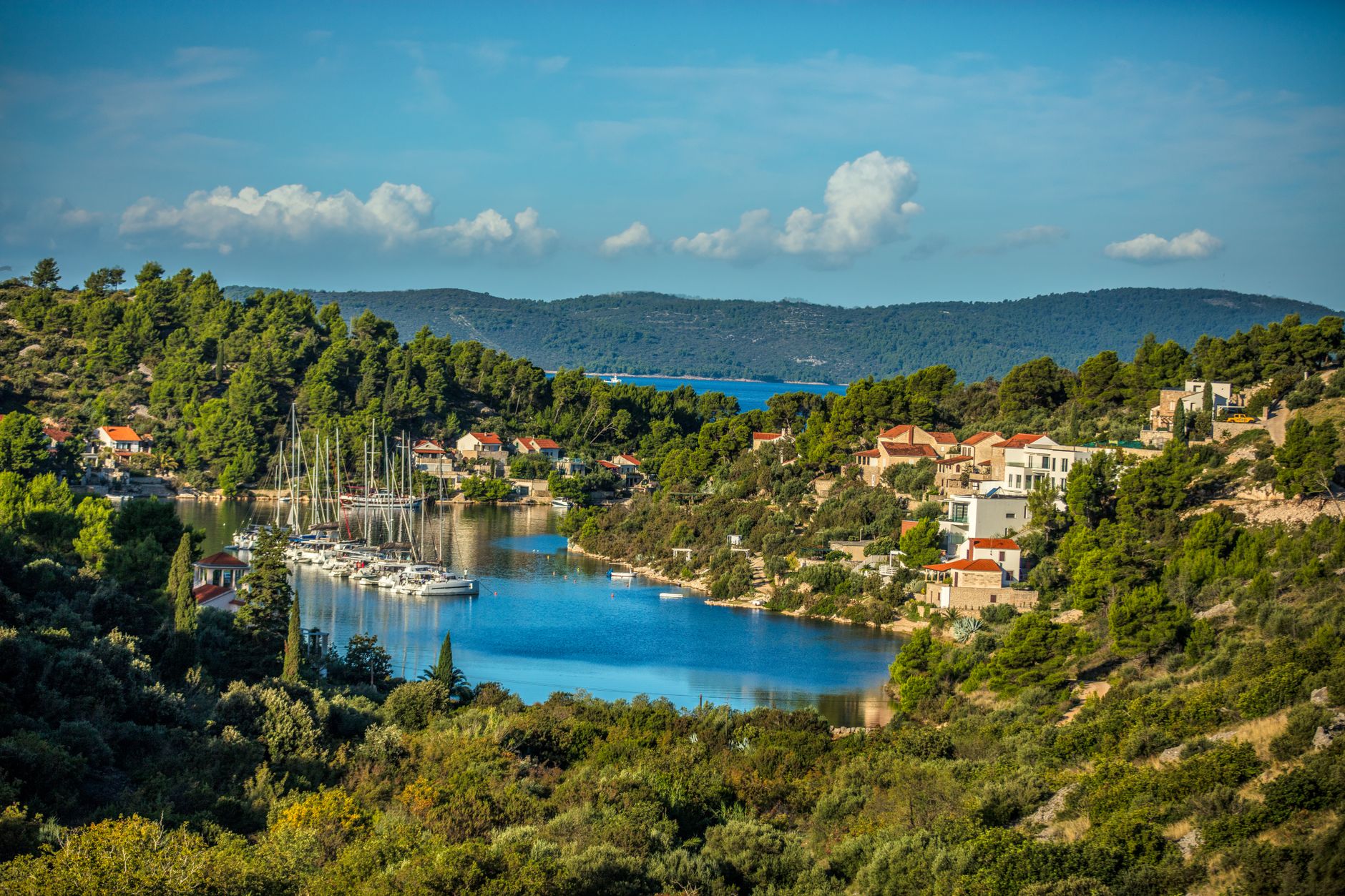
The maestral is the wind that shapes a Dalmatian week. It is a thermal north-westerly that fills in around 10:00 to 11:00, builds to 12-15 knots through the afternoon, and dies at sunset. Plan the day around it: leave at 09:00 and you motor for an hour; leave at 11:00 and you sail. The channels between the islands funnel and accelerate it, so expect 18-20 knots between Hvar and Vis on an afternoon that reads 14 offshore.
The other two matter mostly in the shoulder season. The bura drops off the Velebit mountains from the north-east, arrives with little warning, gusts hard and flattens after a day or so — an anchorage that is sheltered from the maestral may be a lee shore in a bura. The jugo comes from the south-east, builds over 12 to 24 hours, and brings rain and real swell into south-facing bays. Neither is common in July. Both are worth a forecast check every morning in May and October.
The Kornati, and the ticket
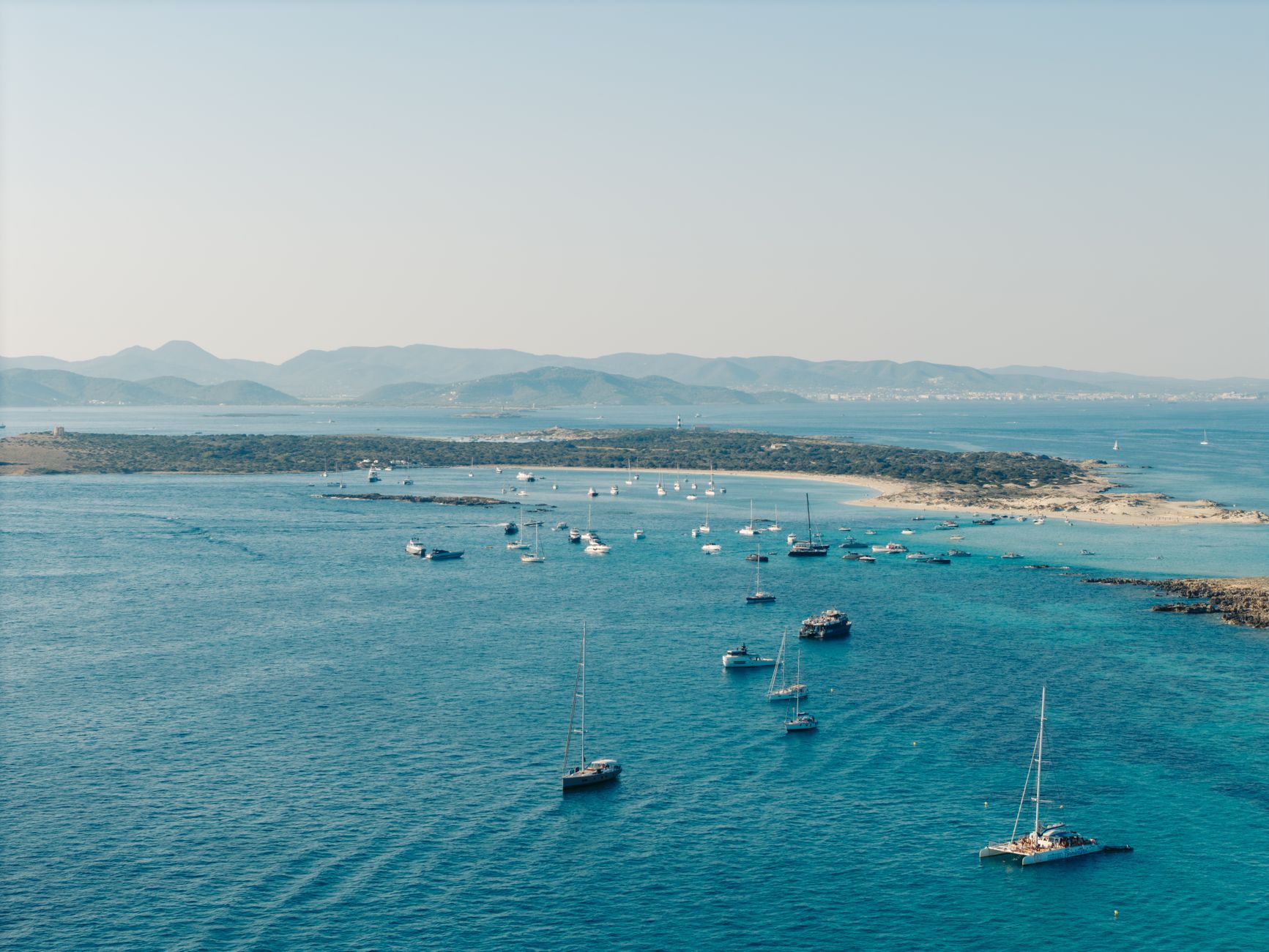
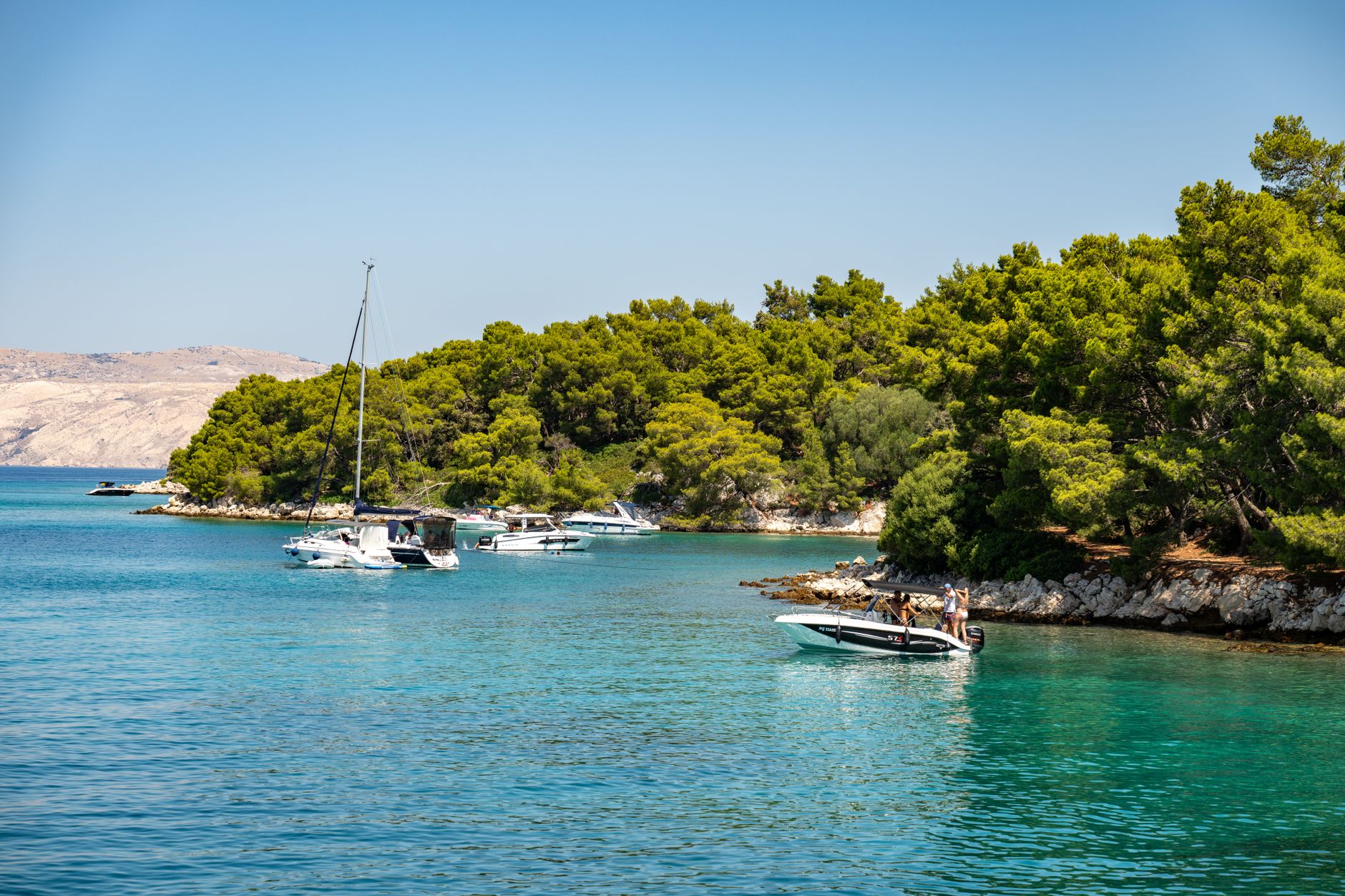
The Kornati are a national park: about 90 islands of bare limestone, no shops, no fresh water, and almost no shade. Entry is ticketed per boat per day, priced by length, and it is cheaper bought in advance online or at an authorised office than from a ranger boat once you are inside the boundary. Some daily tickets include a berth at ACI Piškera, which is the only marina in the park and books out in high season.
Sail it for the anchorages rather than the towns. Levrnaka and Lavsa hold good sand in 5-8m; Vruje and Kravljačica have concessionaire buoys where a restaurant will give you the mooring on the understanding you eat there. The northern boundary runs into Telašćica nature park on Dugi Otok, which charges its own separate fee and has the salt lake and the 160m cliffs. Two days inside the park is enough for most weeks — a third starts to feel like the same rock.
Paperwork for a bareboat
Croatia asks for two documents from the skipper, not one: a recognised skipper licence and a separate VHF or SRC radio operator's certificate. An RYA Day Skipper alone will not clear a handover, and finding that out at the base on a Saturday afternoon is a bad way to start. Bring the originals. A named co-skipper with the same pair of documents is worth having if there is any chance the first skipper is out of action mid-week.
The rest is administrative. The base files a crew list with the harbourmaster and you cannot sail with anyone not on it, so any change of names needs doing before departure. There is a tourist tax per person per day, usually collected at handover, and a security deposit taken by card or held against a damage waiver. If the licences are the obstacle, a skippered boat costs a few hundred euros a day and a crewed sailing yacht comes with skipper and hostess, with nothing to file beyond that crew list.
What a week costs
- Day 1The boat is the smaller half of the number. A bareboat monohull sleeping six to eight runs roughly €2,500-4,500 a week in shoulder season and half again in the first three weeks of August. A bareboat catamaran of the same capacity sits nearer €6,500-10,000, mostly because it takes two berths and everybody wants one. A crewed gulet for a large group starts around €12,000 and climbs quickly with cabin count and crew.
- Day 2Then the running costs, which surprise people. Marina berths in season run roughly €60-150 a night for a 45-50ft boat, more at Hvar and Dubrovnik, nothing at all if you anchor. Budget the Kornati and Telašćica park fees, a transit log, end cleaning, and fuel — a week of mostly sailing burns little, a week of 09:00 departures burns a tank. A power catamaran charter inverts that balance: less time under sail, and fuel becomes the single largest line on the week.
- Day 3Two habits keep the total honest. Anchor three or four nights out of seven — the good bays are free, and a stern line to a pine tree beats a marina finger for €90. And provision at a supermarket in Kaštela or Trogir before you leave rather than at island minimarkets, where the same beer costs double and the vegetables have had a long boat ride.
When to go
September is the best week of the Dalmatian year and we say so without hedging: the sea is at its warmest, the maestral is still reliable, the town quays have space by 17:00 and prices drop the moment the schools go back. June is the close second — long days, thinner crowds, water still cool enough to notice. July and August deliver near-guaranteed sun, 30°C-plus ashore and every anchorage on Hvar occupied by 15:00. May and October are cheap and beautiful, with a real chance of a jugo eating two days of the week.
If flat water matters more than breeze, the alternative is worth naming honestly. An Ionian yacht charter in Greece gives shorter hops and calmer afternoons than Dalmatia, at the cost of the Adriatic's clear water and stone towns. Going the other way, a one-way week can run south to Montenegro and the Bay of Kotor, which adds border formalities at Zelenika and a relocation fee, but puts you in a fjord under 1,700m mountains.
Plan your week
Start with the dates, not the boat. Croatian charter weeks run Saturday to Saturday, the good boats in the popular size bands go by February for the following summer, and September availability disappears earlier than people expect because it is the week the crews who know the ground book for themselves. Once the week is fixed, choose the base by the islands you want, then the boat.
Be specific with a broker about three things and the shortlist writes itself: how many of you are sleeping aboard, whether you hold a skipper licence and a VHF certificate, and how many nights you are willing to anchor rather than take a berth. Those three answers separate a 45ft monohull out of Rogoznica from a catamaran out of Kaštela more reliably than any brochure. Tell us the honest answer to the middle one; the licence question is the most common reason a booking has to change shape late.
Right for competent bareboat crews who want short passages, deep water and a town to walk into most evenings; right too for groups who would rather hire a skipper than sit an exam. Less right for anyone chasing empty anchorages in August, or for distance sailors who want long open-water legs — the Dalmatian islands are close together, and that is precisely the point.