Why sail Mauritius
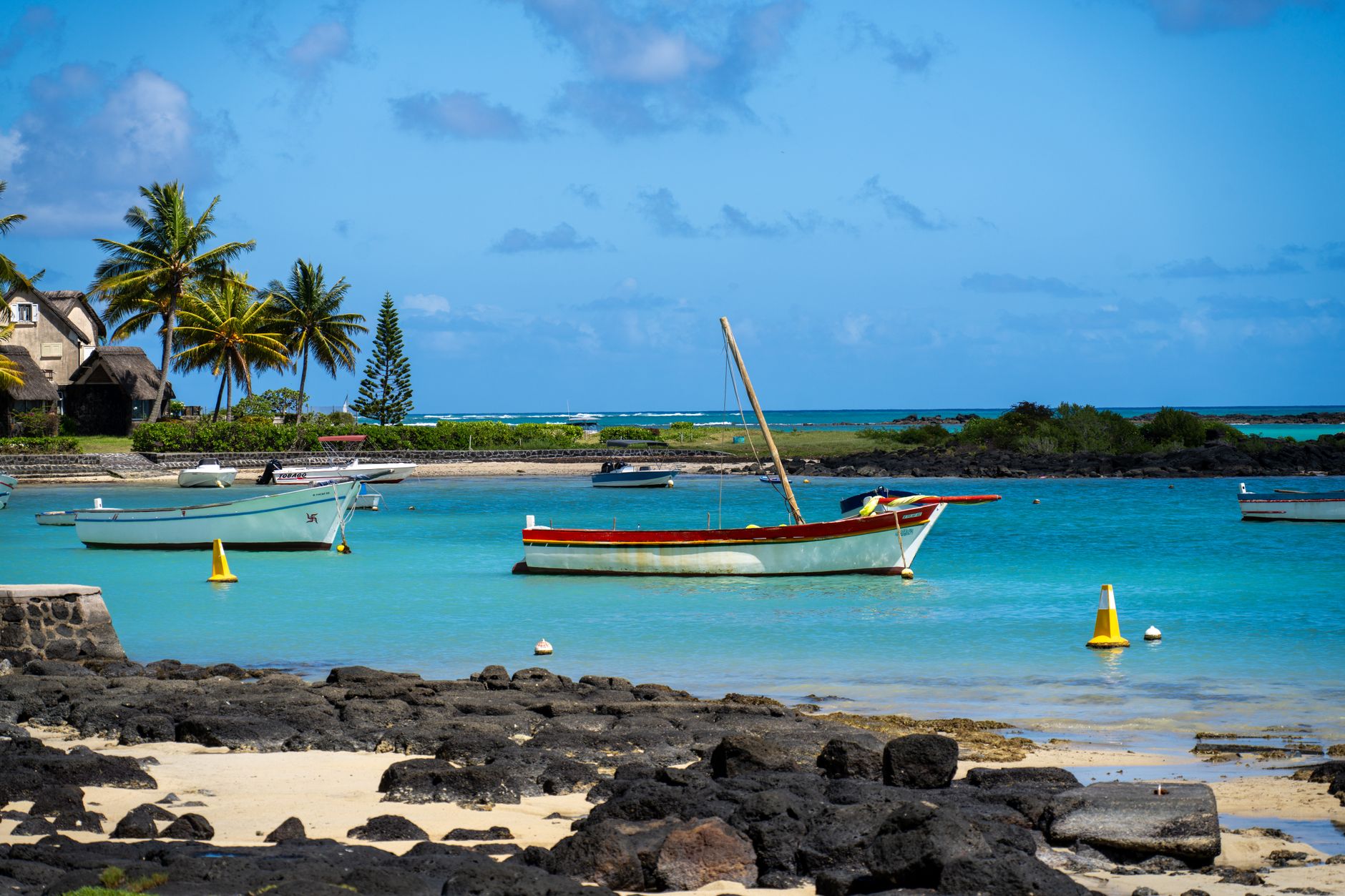
Mauritius sits alone in the Indian Ocean, 900km east of Madagascar, ringed almost entirely by a coral reef. That reef is the point. It breaks the ocean swell before it reaches the coast, so the water inside — the lagoon — stays flat, clear and a shade of turquoise that photographs badly because nobody believes it. You sail in warm, protected water with the surf breaking on the reef a mile off your beam. It suits people who want the tropics without the passage-making. The trade-off: the lagoon is not open ocean, and the reef passes need respect and local knowledge.
The sailing areas
Most charters work the north and east coasts. The north, around Grand Baie and Cap Malheureux, is the busiest and best-served — day-sail range to the northern islands of Coin de Mire (Gunner's Quoin), Île Plate and Îlot Gabriel, where you anchor over sand and swim off the boat. The east coast, off Trou d'Eau Douce, opens onto Île aux Cerfs and a chain of quieter lagoons; it's greener, wetter, less built up. The west coast around Black River and Tamarin is deeper water, better for game fishing and dolphin-watching in the morning. The south is exposed and rarely chartered under sail.
Season and winds
The sailing season is the austral summer, roughly November to April, when the south-east trades ease and the water is warmest — high 20s°C. This is also the cyclone window, so charters are weather-watched closely and plans stay flexible. May to October is the austral winter: cooler, drier, and windier, with the south-east trades blowing hard and steady, 15-25 knots most afternoons. Good sailing if you want breeze, but the water is cooler and the northern lagoons get choppy. The reef always shelters you from swell, but not from wind. Afternoons build; mornings are usually calmest.
Charter types
We run charters out of Mauritius across the north and east grounds. Skippered charter is the norm here — the reef passes, the lagoon markers and the changeable weather reward a crew who sails these waters every week, and bareboat is uncommon on the island. Catamarans dominate the fleet because the shallow lagoon draught and the flat water suit them: stable at anchor, easy to swim off, plenty of deck. Day charters and half-day sunset runs from Grand Baie are straightforward; multi-day charters work the coast between the north islands and the east lagoons. Crew details on request.
What it costs
Costs vary by boat size, season and whether you take a full week or a day. As a rough guide, a skippered catamaran day charter with lunch and snorkelling for a small group runs from a few hundred EUR per boat; a multi-day skippered charter is quoted by the week and depends heavily on the yacht. Fuel, marina fees and provisioning are usually additional or arranged on your behalf. High season (December-January) and school holidays sit at the top of the range. For anything beyond a day sail we quote per boat — Price on request — so you get a real number for your dates rather than a guess.
A sample week
Day 1 — Board at Grand Baie in the afternoon, settle in, short shakedown sail in the northern lagoon, anchor for the night off Cap Malheureux.
Day 2 — North to Coin de Mire and Île Plate. Anchor over sand at Îlot Gabriel, snorkel the reef edge, lunch aboard.
Day 3 — Long day-sail down the east coast toward Trou d'Eau Douce. This leg wants a settled forecast; the crew calls it.
Day 4 — Île aux Cerfs and the eastern lagoons. Quieter water, mangrove-fringed shoreline, good swimming.
Day 5 — Work back north, stopping to snorkel where the light's right. Afternoon breeze fills in by two.
Day 6 — The northern islands again at your own pace, or ashore at Grand Baie for a market run and a rum at the quay.
Day 7 — Morning sail, return to Grand Baie, disembark. Routes flex around the weather — that's not a disclaimer, it's how you sail a reef coast.
Getting there
Fly into Sir Seewoosagur Ramgoolam International Airport in the south-east of the island. It's well connected to Europe, the Gulf and Africa; direct flights run from Paris, London and Dubai among others. From the airport it's about 90 minutes by road to Grand Baie in the north, less to the east-coast base. No visa is needed for most nationalities for tourist stays — check your passport, but it's rarely paperwork-heavy. Drive on the left. English and French are both widely spoken. Message us on WhatsApp with your dates and we'll confirm the base and transfers.
Who it suits
Right for first charterers, families and anyone who wants warm, flat, clear water and short hops between anchorages. Less right for serious distance sailors chasing open-ocean miles — the reef keeps you in, by design.


Mauritius questions
Asked and answered.
How much does a yacht charter in Mauritius cost?
Do I need a sailing licence to charter in Mauritius?
When is the best time to sail Mauritius?
Where do charters start in Mauritius?
Is a Mauritius charter good for families?
What kind of boats do you charter in Mauritius?
Can you dive and snorkel from the boat?
Where can I sail in Mauritius?
How many yachts are available in Mauritius?
How do I get a quote?
Real people
Talk to a human
A real person reads every message and replies within 24 hours — no bots, no auto-replies.
- Honest advice from sailors, not salespeople
- We reply within 24 hours
- No spam, ever
Talk to an expert
Get three options.
Real sailors who run the trips — tell us your week, your group and your vibe. Same day, we send three boats, three prices and the honest trade-offs. Boats we would put our own families on.
Final boarding call
Why not you?
New sailors, beginners or seasoned skippers — tell us when, where and how many. We send three real options the same day. No spam, no fluff, no commitment.